
Illinois is quietly becoming a destination for tiny home living. Whether you’re drawn to affordability, sustainability, or a simpler lifestyle, tiny home communities across the state offer a practical alternative to traditional housing. Unlike scattered tiny homes in rural areas, these communities provide shared amenities, established rules, and a ready-made neighbor network. For homeowners tired of high mortgages and maintenance headaches, a tiny home community might just be the answer. This guide walks you through what you need to know before making the move.
Table of Contents
ToggleKey Takeaways
- Tiny home communities in Illinois offer an affordable housing alternative, with prices ranging from $150,000 to $300,000—significantly less than traditional homes while providing shared amenities and community structure.
- Modern tiny home communities reduce living costs by 30 to 40 percent through lower property taxes, utility savings from efficient designs, and HOA fees typically between $150 to $300 monthly, making them ideal for first-time buyers and retirees.
- Before committing to a tiny home community, visit in person, review complete HOA documents, talk to current residents, and assess whether your lifestyle fits limited square footage and shared common spaces.
- Illinois tiny home communities feature energy-efficient designs and quality construction that substantially lower heating and cooling expenses—especially valuable during harsh winters.
- Popular communities like Lakewood Village near Chicago demonstrate strong demand for walkable, mixed-income neighborhoods that reduce isolation and appeal to both young professionals and downsizers.
What Are Tiny Home Communities and Why They’re Growing in Illinois
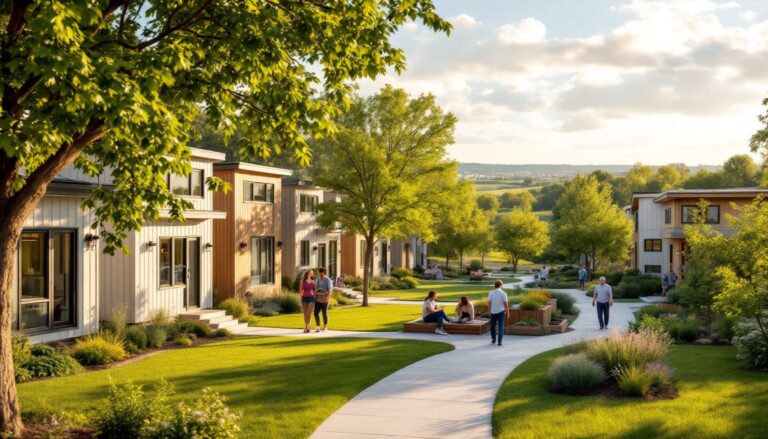
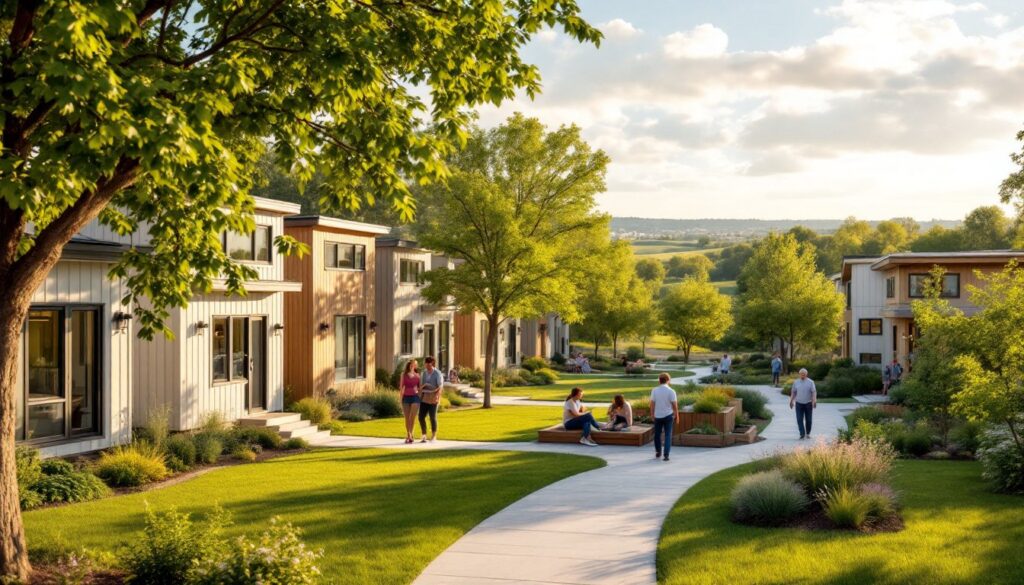
Tiny home communities are planned neighborhoods where residents live in homes typically between 300 and 800 square feet. These aren’t mobile home parks of the past, modern tiny home communities feature owner-occupied homes, shared green spaces, and intentional design. Illinois has seen growth in these developments because they address real pain points: housing affordability, environmental concerns, and the desire for community.
Several factors are driving this trend in Illinois specifically. Population density in and around Chicago pushes younger buyers and downsizers toward suburbs and smaller cities where land costs are lower. Construction costs for tiny homes run 20 to 40 percent less per square foot than traditional homes, making ownership achievable for first-time buyers and retirees on fixed incomes. Sustainability matters too. Smaller footprints mean lower utility bills, less waste, and reduced environmental impact, values that resonate across Illinois.
The Appeal of Affordable, Sustainable Living in the Midwest
The Midwest’s practical ethos aligns naturally with tiny home living. Residents appreciate straightforward value: less square footage to heat and cool, lower property taxes on smaller lots, and maintenance you can actually manage yourself. A tiny home in Illinois typically costs $150,000 to $300,000 depending on location and finishes, compared to median single-family home prices well above $250,000 in many counties.
Sustainability isn’t just a buzzword here, it’s a cost savings. Many tiny home communities feature energy-efficient designs, solar-ready roofs, and quality insulation that cuts heating and cooling expenses. Illinois winters are no joke, and residents quickly notice lower utility bills when living in a well-built, tightly sealed 500-square-foot home instead of a 2,500-square-foot traditional house.
Top Tiny Home Communities Worth Exploring in Illinois
Several established tiny home communities now operate across Illinois, with more in development. Lakewood Village near Chicago offers around 75 homes on a mixed-income model, featuring communal gardens and a clubhouse. The community attracts retirees and young professionals seeking walkability and reduced isolation, important factors that set modern tiny home neighborhoods apart from isolated single-family living.
Outside Chicago, communities like those in Rockford and Springfield have opened in recent years, often on the edges of mid-sized cities where land prices remain reasonable but urban amenities stay accessible. Many are designed around principles discussed in publications like Dwell, which explores modern, human-scaled architecture and sustainable living spaces.
Before committing to a specific community, visit in person at different times of day and week. Talk to current residents about satisfaction with the developer, HOA performance, and the actual day-to-day feel. Online reviews help, but nothing beats walking the property and asking neighbors directly about maintenance issues, community conflicts, or unexpected fees.
Financing and Purchasing Options for Illinois Tiny Homes
Financing a tiny home follows familiar paths, but with twists. Most lenders will issue mortgages for tiny homes on private land, though some banks remain cautious about manufactured homes or unconventional designs. FHA and conventional loans typically require appraisals, which can challenge newer communities lacking comparable sales data. A few lenders, including some credit unions, specialize in tiny home financing and understand the market better.
Down payments often mirror traditional mortgages, 10 to 20 percent, though some developers offer incentives for early buyers in newly opened communities. Your interest rate depends on credit, loan amount, and property type just as it would for a conventional home. A $250,000 tiny home with 15 percent down means a $37,500 down payment and monthly principal and interest payments around $1,200 to $1,400 depending on terms and rates.
Savings add up beyond the mortgage. Property taxes on a 0.25-acre lot with a modest home often run $100 to $200 monthly compared to $300 to $500 for larger suburban properties. HOA fees, typically $150 to $300 monthly, cover maintenance, amenities, and community management. Total housing cost for many residents drops 30 to 40 percent compared to their previous situation.
Community Rules, HOA Structures, and What to Expect
Every tiny home community operates under HOA or cooperative bylaws. These rules exist to protect property values, maintain aesthetics, and manage shared spaces. Before buying, read the HOA documents thoroughly, not the summary, the full rules. Pay attention to restrictions on exterior colors, landscaping, pet policies, and guest parking.
Some communities enforce stricter standards than others. A community focused on contemporary design might prohibit certain paint colors or fence styles. Others take a lighter touch. Ask the HOA about recent disputes, rule changes, and reserve funds. A well-maintained reserve (typically 25 to 50 percent of annual budget) signals responsible management. Red flags include frequent special assessments, high turnover in board members, or vague financial reporting.
HOA fees cover road maintenance, snow removal, trash collection, lawn care in common areas, and community amenities. In Illinois winter climate, expect robust snow removal budgets. Request three years of HOA financial statements and ask about pending major repairs or planned improvements. Communities backing up to wetlands or old infrastructure sometimes face hidden surprises down the road.
Design Ideas and Maximizing Space in Your Tiny Home
Living small requires intentional design. Tiny homes typically feature open floor plans, high ceilings, and multi-functional furniture to create the illusion of space. Many communities allow customization during construction, that’s your chance to influence layout, finishes, and features.
Smart storage is essential. Built-in shelving, under-bed drawers, and vertical space pull weight in tiny homes. Wall-mounted desks work as offices when you need them, then fold away. Lofted bedrooms reclaim floor area below for living or work space. Light colors and large windows prevent the space from feeling cramped. Many Illinois-based designers draw inspiration from Apartment Therapy and similar sources for clever small-space solutions that actually work.
Before signing on to a specific floor plan, walk through model homes and consider your actual lifestyle. If you cook frequently, a galley kitchen with proper counter space matters more than an extra bedroom. If you work from home, dedicated office space beats a shared table. Virtual tours help, but physically standing in a 500-square-foot home for 20 minutes reveals whether the layout suits you.
Is a Tiny Home Community Right for Your Lifestyle?
Tiny home living suits some people and not others. Honestly assess whether you can thrive with limited square footage, shared common spaces, and HOA oversight. If you have a large family, multiple hobbies requiring dedicated rooms, or mountains of possessions, a 500-square-foot home will feel cramped no matter how clever the design.
Tiny homes work brilliantly for downsizers leaving large family homes, young professionals without kids, and retirees wanting to simplify. Single occupants often find 400 to 600 square feet perfectly livable. Couples appreciate the low maintenance and shared decision-making. Real estate trends covered by Curbed show that urban and suburban micro-communities attract buyers at every life stage.
Visit during occupied hours and ask residents the hard questions: Do you regret the space limitation? How’s the community vibe? Any surprises with the HOA? Most residents in established communities will give honest answers. If the responses sound overwhelmingly positive or negative, keep looking.