
Tiny home communities are reshaping the Texas housing landscape, offering affordable alternatives to traditional single-family homes without sacrificing community or quality of life. Whether you’re drawn by lower purchase prices, reduced maintenance, or a more sustainable lifestyle, understanding what tiny home communities deliver, and what they ask in return, is essential before making the leap. This guide walks you through the reality of tiny home living in Texas, from the mechanics of community ownership to the practical considerations that matter most.
Table of Contents
ToggleKey Takeaways
- Tiny home communities in Texas offer purchase prices of $150,000–$250,000, roughly 40–50% lower than comparable conventional homes while maintaining quality construction on permanent foundations.
- Ownership structures vary from outright home and lot ownership to home ownership with land leases ($300–$600 monthly), making it essential to understand the financial implications before buying.
- Texas has become a tiny home hub due to abundant developable land, demographic shifts toward low-maintenance living, and strong sustainability appeal in a hot climate.
- Shared amenities like community gardens, maker spaces, and gathering centers create walkable, socially connected neighborhoods that offset the limited private outdoor space.
- Tiny home communities are ideal for empty nesters, remote workers, and individuals seeking minimal maintenance and built-in community, but may not suit families planning significant growth or those preferring independence.
- Financing can be challenging with some lenders; work with mortgage brokers experienced in tiny home financing, and thoroughly research specific communities before committing to ensure alignment with your long-term goals.
What Are Tiny Home Communities?
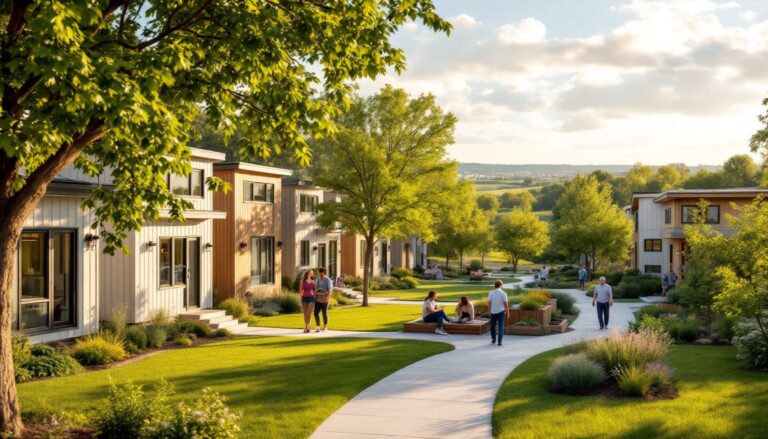
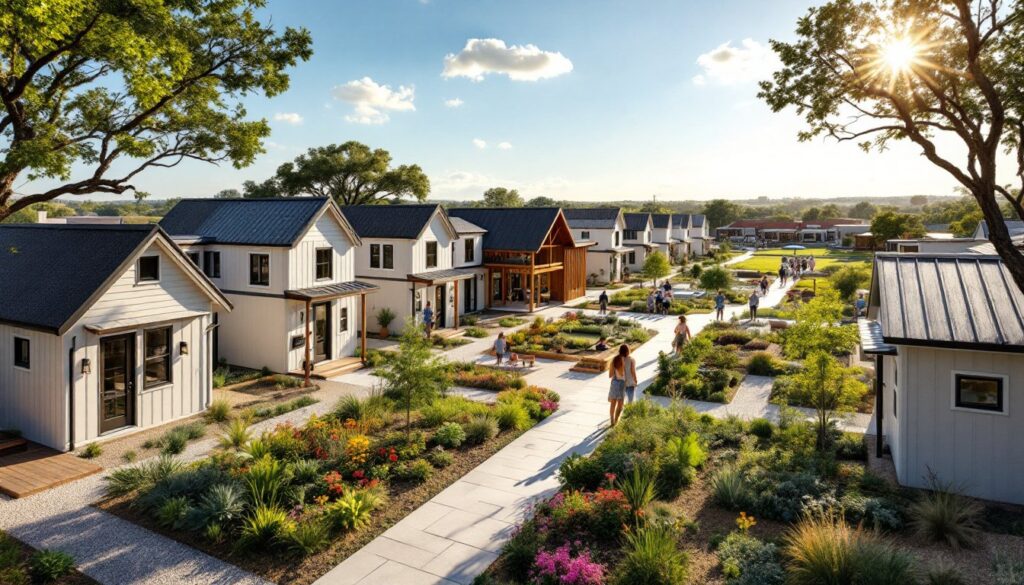
A tiny home community is a planned development of small, typically single-story dwellings built on a shared plot of land. Each home is usually between 400 and 800 square feet, roughly one-third the size of a conventional U.S. home, and sits on its own lot, though communities are often deed-restricted to maintain standards.
Ownership structures vary. In some communities, you own your home and the lot outright. In others, you own the home but lease the land from the community organization, paying monthly or annual lot rent (typically $300–$600 per month in Texas). A few operate as co-housing developments where residents share ownership stakes in common areas like gardens, workshops, or community centers.
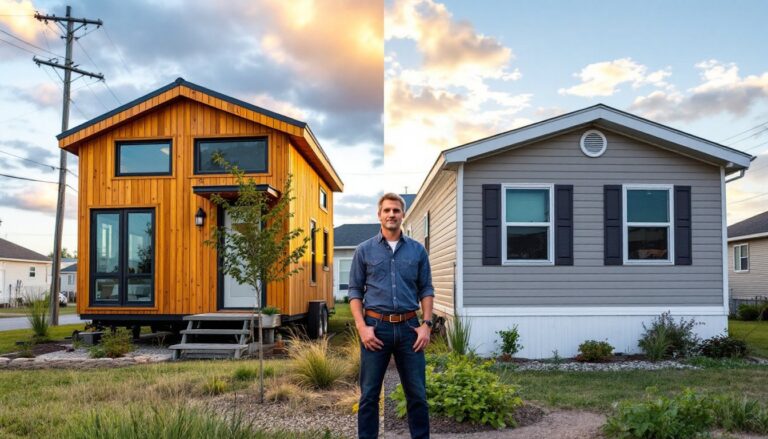
These aren’t mobile home parks or RV communities. Homes are typically built on permanent foundations, connected to municipal utilities, and often include front porches, siding, and finishes indistinguishable from standard housing. Building codes and design guidelines keep exteriors consistent, though floor plans and finishes vary.
Why Texas Is Becoming a Tiny Home Hub
Texas has emerged as a hotbed for tiny home development for several hard reasons. First, affordability. The median home price in Texas sits well below the national average, but even here, first-time buyers face sticker shock. A tiny home in a Texas community typically costs $150,000–$250,000, compared to $300,000+ for a conventional starter home in the same region.
Second, land availability. Texas has abundant developable land, especially in emerging metros like Austin, San Antonio, and the greater Dallas-Fort Worth corridor. Developers can acquire sites at reasonable costs and pass those savings to buyers.
Third, the demographic shift. Young professionals, empty nesters, and retirees increasingly value low-maintenance living and community connection over square footage. The pandemic accelerated remote work, making location flexibility attractive for those seeking a lower cost of living without geographic constraint.
Fourth, sustainability messaging resonates. Smaller homes require less energy to heat and cool, a significant advantage in a hot climate like Texas, and reduce embodied carbon and material waste. Many Texas communities emphasize walkability, native landscaping, and electric-ready infrastructure.
Popular Tiny Home Communities Across Texas
Several established and emerging communities showcase the diversity of tiny home living in Texas:
Marty Leonard Community & Park (Fort Worth). A mixed-income co-housing model with 48 residences designed for seniors and working families. It emphasizes community dining, gardening, and shared events. Homes range from 400–600 square feet.
Safico Village (San Antonio). A newer development blending tiny homes with traditional architectural language. Amenities include a community garden, maker space, and walking paths. Lot leases average $400–$500 monthly.
Mu Rho Community (Austin area). Marketed toward young professionals and remote workers. Features shared co-working space, frequent community events, and flexible home ownership with the option to rent or buy.
Avery Ranch and similar suburban North Austin developments. While not exclusively tiny homes, many offer small-lot options (0.15–0.25 acre) with homes under 800 square feet at competitive prices.
Dwell magazine frequently covers innovative prefab and tiny home designs in Texas, and you can find case studies of successful communities online. Availability and pricing fluctuate, so research local developers and real estate agents familiar with tiny home markets in your target region.
Cost Benefits and Financing Your Tiny Home Purchase
The financial advantage of a tiny home is real but requires honest math. Purchase price is lower, but total cost of ownership depends on several factors:
Purchase Price and Down Payments. Expect $150,000–$250,000 for a decent-quality home. Down payment requirements are the same as conventional mortgages (3–20%), so you’ll still need $4,500–$50,000 in cash depending on the loan type.
Lot Rent (If Applicable). If you lease land rather than own it, factor $300–$600 monthly (or more in desirable locations). This is tax-deductible in some cases and typically includes shared amenities and maintenance, but it’s not a mortgage, rent increases, and you have no equity.
Property Taxes and Insurance. Lower home values mean lower property taxes. Insurance premiums are also reduced due to the smaller replacement cost. Combined, expect $100–$200 monthly compared to $300–$500 for a traditional home.
Utilities and Maintenance. Heating and cooling costs are significantly lower in a 500-square-foot home than a 2,000-square-foot house, especially in Texas’s hot climate. Roof, HVAC, and exterior maintenance are less extensive and less expensive.
Financing Challenges. Many lenders are cautious with tiny home communities, particularly those with ground leases. FHA loans may require special approval if the community is newer or less established. Talk to mortgage brokers experienced with tiny home financing in Texas before shopping for a specific property.
Conservatively, buyers report total housing costs 40–50% lower than comparable conventional homes in the same region.
Community Amenities and Lifestyle Considerations
One reason tiny home communities thrive is because they bundle shared amenities that offset limited private space. Curbed covers real estate trends showing that walkable, amenity-rich neighborhoods command premiums: tiny home communities achieve walkability at lower absolute cost.
Common Amenities. Expect shared gardens, courtyards, or parks in most communities. Many include community centers with gathering space, maker workshops (woodworking, crafting), fitness facilities, or dog parks. Some operate tool libraries so residents share expensive equipment rather than each owning a drill press.
Social Connection. Unlike suburbs where neighbors rarely meet, tiny home communities foster interaction through proximity, events, and shared governance. This appeals to empty nesters, young families without extended family nearby, and anyone seeking built-in community.
Design and Aesthetics. Deed restrictions ensure a cohesive look, no overgrown lots, mismatched colors, or visible junk. This maintains property values and creates the “sense of place” that attracts buyers.
Trade-offs. Limited private outdoor space is the obvious one. You won’t have a large backyard for a pool or vegetable garden (though community gardens often substitute). Noise can be higher with closer neighbors. Governance requires participation: you’ll attend meetings and follow community rules. Some residents find this enriching: others find it constraining.
Is a Tiny Home Community Right for You?
Tiny home communities aren’t universally appropriate. Ask yourself these questions honestly:
Space and Lifestyle. Do you work from home and need a dedicated office, or are you out most days? Do you have large hobbies (woodworking, music, art) that require space? Can you pare down possessions to fit 500–700 square feet comfortably? Apartment Therapy regularly features small-space solutions, but those work best for people philosophically aligned with minimalism.
Family Plans. Are you a couple, a single person, or a small family? Most communities accommodate families with young children, but space gets tight with teenagers. If you expect your family to grow substantially, a tiny home may be a stepping stone, not a permanent solution.
Community Comfort. Do you thrive with neighbors nearby and shared governance, or do you prefer independence and privacy? Some people feel energized by community events and shared projects: others find it exhausting.
Financial Stability. Tiny homes are excellent if you’re financially stable and credit-ready for a mortgage. If you’re recovering from debt or have irregular income, the added complexity of ground leases and HOA rules may create headaches.
Long-Term Plans. Consider resale. Tiny home markets are growing but less established than conventional homes. Some communities hold value well: others lag. Research the specific community’s history, occupancy rates, and buyer demand before committing.
Walkthrough and Inspection. Visit communities during occupied hours, talk to current residents (off the record if possible), and spend time in the actual footprint of a home model. You’ll quickly sense whether the lifestyle fits.
Conclusion
Tiny home communities in Texas offer real affordability and community benefits that appeal to a growing segment of homebuyers. They’re not a magic fix for housing costs or a lifestyle choice for everyone, but for the right person, someone seeking lower expenses, less maintenance, and built-in social connection, they deliver on those promises. Take your time researching communities in your target region, talk to current residents, and honestly assess whether the compact footprint and communal living align with your needs.