
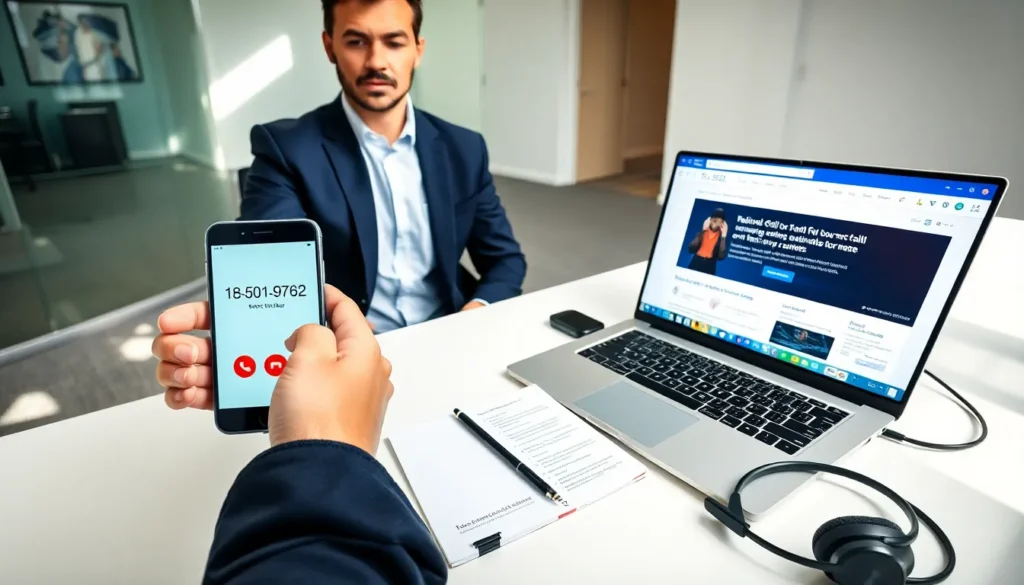

18005319762 appears in many call reports and online listings. Readers will learn who might call from this number, how to check the caller, which signs point to a scam, and what to do after an unwanted call.
Table of Contents
ToggleKey Takeaways
- Treat any call from 18005319762 as suspicious until you verify the caller’s identity and reason for calling.
- Verify legitimacy by asking for a callback number, then hang up and call the company’s published phone number from an official bill or website.
- Watch for scam red flags—requests for gift card or wire payments, demands for full SSNs, threats, secrecy, or requests for remote access—and hang up immediately if present.
- If you answered, end the call before sharing data, document caller details, check accounts for unauthorized activity, and change passwords or enable MFA if needed.
- Block 18005319762 on your phone, enable carrier spam filters, register on the Do Not Call list, and report the call to the FTC, FCC, and the alleged company’s official support channel.
At-A-Glance Profile: What This Number Typically Represents
18005319762 often shows as a toll-free or spoofed number. Many callers use toll-free numbers to appear local or official. Some legitimate businesses use similar patterns to reach customers. Scammers also use toll-free numbers to imitate banks, utilities, and government offices.
18005319762 appears in public complaint forums. Users often report calls that ask for personal data or payment. Other reports describe prerecorded messages that push callbacks. The call style can vary by caller. The number can link to legitimate service centers, telemarketers, or fraud operations.
People should treat calls from 18005319762 with caution. The number alone does not prove intent. Call context, message content, and caller requests show whether the call is safe.
Who Might Be Calling From 1-800-531-9762
Legitimate companies use toll-free numbers for customer service. Banks, insurance firms, and utilities sometimes call from similar numbers. Telemarketing firms use toll-free lines to place volume calls. Debt collectors may use toll-free numbers when they contact consumers.
Scammers also call from toll-free numbers. Criminals try to mimic known companies. They ask for account numbers, social security numbers, or direct payments. Some fraudsters ask for remote access to a computer or ask for gift card payments.
Third-party vendors and survey firms use toll-free numbers too. These calls often ask for feedback or offer promotions. The caller may identify a business name. Callers that give clear contact details and let callers verify the company are more likely to be legitimate.
How To Verify The Caller And Confirm Legitimacy
Ask for the caller’s name, department, and a callback number. Legitimate agents will provide verifiable details. Hang up and call the company’s published number when in doubt. Use the company phone number from an official bill, website, or app.
Search the number online. Look for recent complaints and official pages that list the number. Check government sites for known scam advisory posts. Use caller ID apps that aggregate reports from other users.
Request written confirmation by email or text. Legitimate firms often follow up in writing. Avoid providing sensitive data over the phone. If the caller pressures for immediate action, treat the call as suspect. Verify claims about account problems by logging into the official site directly, not through links the caller provides.
Common Red Flags That Indicate A Scam
The caller asks for payment by gift card, wire transfer, or cryptocurrency. Legitimate businesses rarely request those payment methods. The caller demands personal data like full social security numbers. Reputable companies avoid collecting full SSNs by phone.
The caller threatens arrest, legal action, or immediate service shutoff without proof. Scammers use fear to force quick compliance. The caller pressures for secrecy or asks to bypass normal channels. Real agents rarely ask you to keep a call secret.
The call uses poor grammar or odd phrasing. Scammers often use call centers overseas and poor scripts. The caller refuses to provide a verifiable company phone number. Scammers avoid traceable contact points. The caller asks for remote access to a device or asks you to download software.
If You Answered: Immediate Steps To Take
End the call if the caller pressures you. Hang up before you share any data. Note the caller’s name, company, and the time of the call. Record any specifics that might help a report.
Check your accounts for unauthorized activity. Log into accounts directly from official sites. Change passwords if the caller had any account details. Enable multi-factor authentication when available.
Report the call to the company the caller claimed to represent. Use the official support channels on the company website. File a complaint with the Federal Trade Commission if the call involved fraud. Save any voicemail or message that the caller left as evidence.
How To Block, Report, And Prevent Future Unwanted Calls
Save the number and block it on the phone. Most smartphones provide an option to block numbers. Use your carrier’s spam call filters and report the number to the carrier. Carriers can flag numbers and reduce future calls.
Register the phone with the National Do Not Call Registry. The registry helps reduce telemarketing calls from legitimate firms. It does not stop all scams, but it reduces legal marketing calls.
Install a reputable call blocker app. Many apps identify and block reported scam numbers automatically. Keep phone software updated. Scammers often use new numbers: filters learn from user reports and update lists.
Legal Rights, Consumer Resources, And Where To Find Help
Consumers may have rights under federal and state law. Debt collectors must follow the Fair Debt Collection Practices Act. Companies that violate consumer rules can face fines and legal action.
File a complaint with the Federal Trade Commission for scam calls. The FTC collects complaints and issues consumer alerts. Report scams to the Federal Communications Commission when calls involve robocalls or spoofing.
Contact the state attorney general’s office for local action. Many state offices keep consumer protection pages that list current scams. Use local consumer advocacy groups for guidance and support. Keep records of calls, messages, and transactions when you file a report.