
Post and beam construction isn’t new, it’s been the backbone of barns, houses, and timber-frame buildings for centuries. But small post and beam homes are experiencing a real resurgence among homeowners seeking durability, character, and functional open spaces. Unlike conventional stick-frame construction, post and beam relies on large timber posts and beams to carry structural loads, eliminating much of the interior walls and creating those clean, airy interiors that modern designers and DIY enthusiasts crave. Whether you’re considering buying one, renovating an existing structure, or planning a new build, understanding what makes these homes tick helps you make smart decisions about design, maintenance, and investment.
Table of Contents
ToggleKey Takeaways
- Small post and beam homes use large timber posts and beams to eliminate interior load-bearing walls, creating open floor plans with dramatic ceiling heights and natural light.
- Post and beam construction offers durability and timeless aesthetics—exposed timbers age gracefully and last centuries with minimal maintenance, never feeling dated regardless of design trends.
- Smaller post and beam homes can achieve surprising energy efficiency through optimized HVAC routing, thermal mass moderation, and reduced conditioned space compared to conventional framing.
- When buying an existing post and beam home, hire a structural engineer to inspect timber integrity, beam-to-post connections, and insulation adequacy, as repairs and updates can add significant costs.
- Building a new post and beam home from scratch provides design control but requires licensed timber framers, structural engineers, and special permits—expect 6 to 12 months and $150–300+ per square foot.
- Design small post and beam interiors by showcasing exposed timbers with clear finishes, using sliding doors and glass partitions to define zones without walls, and strategically routing HVAC to preserve the open aesthetic.
What Are Post And Beam Homes?
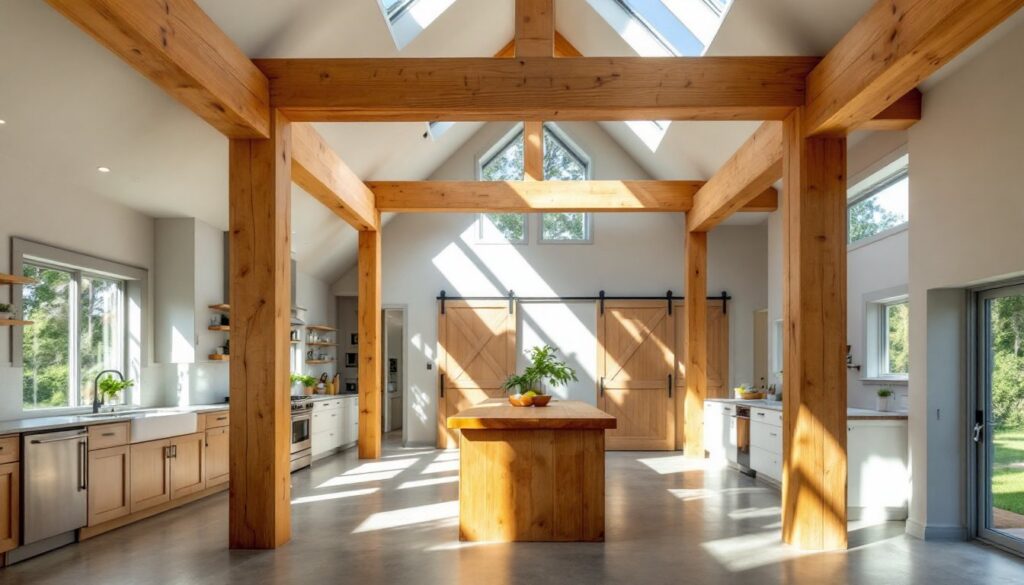
Post and beam construction uses large vertical timber posts and horizontal beams to support the structure’s weight, rather than relying on closely spaced studs as in conventional framing. Typical posts measure 6×6, 8×8, or larger (actual dimensions are roughly ¾ inch smaller than nominal), and beams span between them. This skeleton approach allows you to eliminate interior load-bearing walls, creating unobstructed floor plans and dramatic ceiling heights.
The posts and beams are often connected with traditional joinery, mortise and tenon joints, pegs, or modern metal connectors, depending on whether the home is built with hand-hewn timbers or engineered lumber. Small post and beam homes typically range from 800 to 2,500 square feet, though the term “small” is relative: the defining feature is the exposed timber structure, not the square footage.
Historically, post and beam was the go-to method for barns and farmhouses because it was efficient and used the materials at hand. Today, builders blend that heritage approach with modern materials like 21st century post-and-beam construction techniques, engineered timbers, and energy-efficient systems to create contemporary homes with timeless character.
The Appeal of Small Post And Beam Design
Open Floor Plans and Natural Light
With fewer interior walls dividing the space, post and beam homes naturally flow from one room to another. A single open living-dining-kitchen area feels spacious and encourages natural sightlines. Large windows and skylights fit seamlessly into the design because the beams, not walls, carry the load, you can punch out a wall for a wall of glass without structural drama.
Light floods through these openings and bounces off exposed wood surfaces, creating warmth even on gray days. Homeowners love this sense of continuity: kids can play in the living room while a parent cooks, and the space doesn’t feel cramped even though modest square footage. It’s efficient living without feeling cramped.
Durability and Timeless Aesthetics
Solid timber beams, especially when made from old-growth or reclaimed wood, last centuries with minimal maintenance. Unlike drywall-covered studs that hide rot and pest damage, exposed timbers let you spot problems early. Finish them with a clear coat or stain, and they age gracefully, darkening slightly and developing character over decades.
The aesthetic appeal is undeniable. Exposed beams and posts create a handcrafted, intentional feel that’s harder to achieve in conventional homes. Whether paired with modern finishes or rustic farmhouse touches, the timber structure anchors the design and never feels dated. Many homeowners find that aesthetic worth the premium cost alone. modern architecture and sustainable design trends to see how contemporary designers are rethinking timber homes for today’s lifestyle.
Energy Efficiency and Sustainable Living
Post and beam homes, especially smaller ones, can be surprisingly efficient. The open layout means fewer walls and ductwork required for HVAC systems, you’re heating and cooling a continuous space rather than multiple boxed rooms. Thoughtful insulation between the beams (typically 6 to 12 inches of foam, mineral wool, or cellulose) reduces thermal bridging, and the exposed thermal mass of large timbers moderates temperature swings.
Reclaimed and old-growth timbers are harvested from deconstructed buildings or sustainably managed forests, making them a lower-carbon choice than new lumber milled and transported long distances. Even engineered or kiln-dried post and beam stock typically comes from suppliers prioritizing responsible forestry.
A small post and beam home also invites intentional living, you occupy less conditioned space, choose quality materials over quantity, and often install passive solar features (south-facing windows, overhangs for summer shade) that work with the open plan. Combine this with modern insulation, triple-pane windows, and a heat pump or high-efficiency furnace, and you’ve got a low-energy home that doesn’t sacrifice comfort. The benefits of sustainable home design extend beyond utility savings to durability, indoor air quality, and long-term resilience.
Building or Buying a Small Post And Beam Home
Buying an Existing Post and Beam Home
If you find an older post and beam structure (often a converted barn or 1970s timber-frame house), have a structural engineer inspect the timbers for decay, insect damage, and settlement. Look closely at beam-to-post connections: older homes may rely on pegs alone, which can loosen over time. Budget for reinsulation if the home was built before modern energy codes. A roof inspection is critical, leaks travel down the inside of beams and hide until damage is severe.
Prices vary wildly by region and condition. Restored post and beam homes in rural areas might run $250–400 per square foot: in trendy locales, double or triple that. Don’t overlook the cost of updates: electrical rewiring, plumbing relocation, HVAC installation, and foundation repair all factor in.
Building New
Building a small post and beam home from scratch gives you control over insulation, mechanical systems, and finishes. You can source true reclaimed timbers, use modern engineered lumber (like laminated beams), or work with a timber frame company that designs and mills components for assembly on site. Most new builds require a licensed timber framer and structural engineer, this is not a casual DIY project.
Budget $150–300+ per square foot for a new post and beam structure, depending on material quality and complexity. Prefab timber-frame kits lower costs slightly and compress timelines. Permits are essential: post and beam requires special inspection and approval because the structural system differs from code-standard framing. Plan for 6 to 12 months from design to occupancy.
Interior Design and Renovation Ideas
Finishes and Materials
Let the timbers breathe, avoid burying them in paint or heavy drywall finishes. A clear matte or satin finish shows the wood’s grain and color variation. If you prefer paint, a subtle warm white or soft gray keeps the focus on structure without creating visual chaos. Pair exposed beams with simple drywall walls, a polished concrete floor, and minimal trim for a clean, Scandinavian feel, or go rustic with whitewashed walls and reclaimed flooring.
Storage and built-ins work beautifully in post and beam homes because you can design shelving, cabinetry, and nooks without worrying about hidden studs. Open shelving between posts and under beams keeps lines clean and sight lines clear.
Dividing Space Without Walls
Sliding barn doors, glass partitions, heavy curtains, or partial-height cabinetry define zones without blocking light or the visual sweep of the beams. A kitchen island or peninsula naturally separates cooking from living without a full wall. An elevated sleeping loft tucked under secondary beams maximizes square footage in a small footprint, a clever use of vertical space.
Practical Renovation Checklist
- Inspect beams and posts for cracks, notches, or signs of previous damage before finishing them.
- Plan HVAC routing to run above or below beams, avoiding ductwork that clutters the space.
- Install recessed lighting in or near beams to avoid pendant lights blocking sightlines.
- Reinforce joinery with modern steel plates or bolts if original connections are loose, this is a structural issue, not cosmetic.
- Treat wood for insects if the home is older and timbers haven’t been sealed recently.