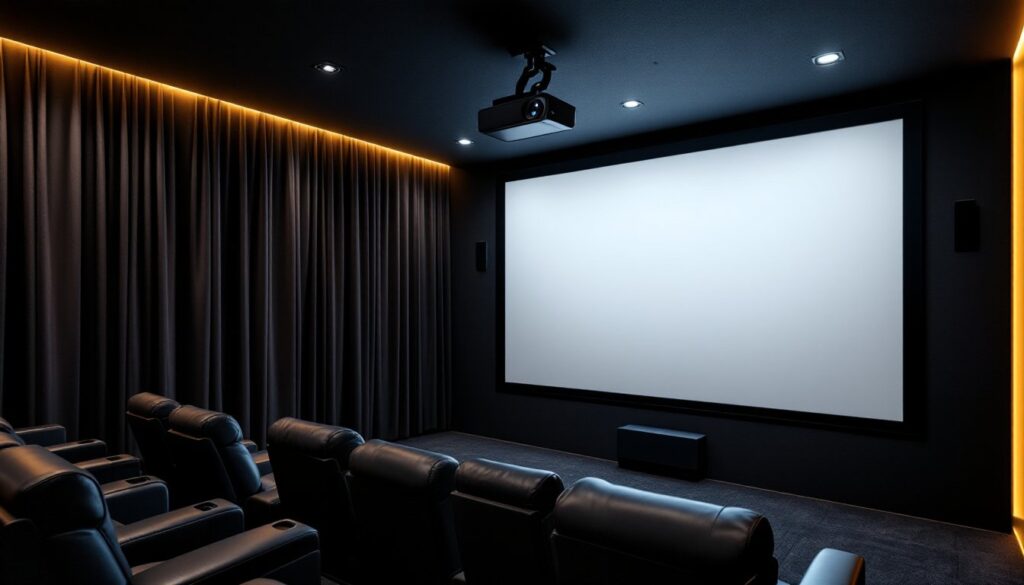

A quality home theater projector turns your living room into a genuine cinema, and Sony home theater projectors have become a go-to choice for homeowners who want that experience without the price tag of a commercial theater build-out. Whether you’re planning to watch movies, play games, or host sports nights, a Sony projector delivers bright, sharp imagery on a large screen. This guide walks you through what makes Sony stand out, which models fit different budgets, and how to set one up properly so you get the most from your investment.
Table of Contents
ToggleKey Takeaways
- Sony home theater projectors use SXRD technology to deliver superior contrast and rich blacks, making them an ideal choice for anyone wanting cinema-quality picture at home.
- Choose your projector’s brightness based on room lighting: 1,500–2,500 lumens for dark theaters, 3,000+ for mixed-light rooms, and 5,000+ for bright family spaces.
- The VPL-VW1025ES offers the best value for dedicated home theaters with excellent 4K resolution and color accuracy, while the VPL-FHZ75 excels in bright rooms with 5,500 lumens of output.
- Proper installation—including secure ceiling mounting, lens shift adjustments, and high-speed HDMI 2.1 cables—ensures your Sony projector delivers optimal performance for 10+ years.
- Budget between $3,500–$6,000 for a mid-range Sony home theater projector that handles true 4K content, provides solid brightness and contrast, and fits typical living room setups.
Why Sony Home Theater Projectors Stand Out
Sony’s projectors earn respect in the home theater world because they balance image quality, brightness, and reliability without requiring a second mortgage. Their SXRD (Silicon X-tal Reflective Display) technology delivers rich blacks and contrast that plasma and older LCD projectors struggle to match. That contrast ratio matters when you’re watching a dark thriller or space movie, you see shadow detail instead of a black blob.
Durability is another win. Sony projectors are built to last thousands of hours. Most home models come with a lamp rated for 2,000–4,000 hours, which easily covers a decade of casual viewing. The optics are solid, fans are quiet (important when you’re trying to hear dialogue), and Sony’s warranty support is straightforward if something goes wrong.
One more thing: Sony keeps improving their lens shift and zoom range. This means you have flexibility in where you mount the projector, whether it’s on the ceiling, back shelf, or a wall bracket. You can adjust the image to fit your screen without physically moving the unit, a huge convenience for permanent installations.
Sony’s Top Home Theater Projector Models
Sony’s lineup includes several strong contenders for different spaces and budgets. The VPL-FHZ75 is a workhorse for bright rooms. It pushes 5,500 lumens, so if your theater room gets ambient light or you can’t fully blacken it, this model cuts through glare. The 4K SXRD chip delivers full 4K resolution, and it’s reliable enough for commercial installs, which means it’ll handle your living room without breaking a sweat.
For dedicated dark home theaters, the VPL-VW1025ES is the sweet spot. It’s Sony’s premium consumer projector, delivering 1,800 lumens, 4K resolution, and stellar color accuracy. That’s plenty bright for a dimmed theater room, and the image quality justifies its higher price. Many enthusiasts call it the best 4K home theater projector Sony makes.
If you’re stepping up to the flagship, the VPL-GTZ380 is Sony’s top-tier option. It’s bright (10,000 lumens), handles 8K input signals, and uses three separate SXRD chips, one for each color, rather than a single-chip design. This three-chip architecture is more expensive but produces better color separation and almost zero rainbow effect. It’s overkill for most home setups, but serious home theater builders love it.
For a budget entry point, Sony offers older 1080p models that still perform well in secondary rooms or smaller spaces. These drop the SXRD tech but retain decent reliability and a simpler feature set.
Key Features to Consider Before You Buy
Before you purchase, nail down three things: your room size, how much ambient light you can control, and your source content.
Lumens (brightness) is the first number to get right. A dark theater room works well with 1,500–2,500 lumens. Add ambient light, and you need 3,000+ lumens. A bright family room or living room with windows? Plan on 5,000 lumens or higher. Those big lumen numbers help your image stay visible even when someone cracks a door open.
Throw distance and zoom ratio matter more than folks realize. “Throw distance” is how far the projector sits from your screen. If you’re mounting it on a ceiling 12 feet back, you need a projector that can throw an image that far and fill your screen. Sony projectors typically list a zoom ratio (e.g., 1.3:1), which tells you how much flexibility you have. A wider zoom range means you can adjust image size without moving the projector itself.
Contrast ratio, Sony’s SXRD chips excel here, hitting 15,000:1 or better. This ratio measures the difference between the brightest whites and the darkest blacks. Higher is better, especially if you watch dark movies or sci-fi where shadow detail matters.
Brightness and Resolution Matter
Native 4K resolution is standard on Sony’s mid-range and premium models. 4K feeds from streaming services, 4K Blu-ray players, and gaming consoles all look sharper on a true 4K projector than on a 1080p machine. If your sources are mostly 1080p cable TV or older DVDs, a 4K projector still upscales them nicely, but you won’t see the full benefit.
Color accuracy matters if you color-grade photos or videos at home. Sony’s models support DCI-P3 and Rec. 709 color spaces, and higher-end units offer calibration modes and lens memory presets. If you’re just watching movies, this is overkill, but if precision matters, you’ll appreciate it.
Setting Up Your Projector at Home
Installation is the moment where most DIYers succeed or stumble. Here’s the real talk: mounting, keystone adjustment, and screen placement deserve time and care.
Mounting options: Ceiling-mount is the cleanest look and works well if you’re building a dedicated theater room. Wall-mount or shelf-mount are fine for multi-use spaces. Use a ceiling-rated projector bracket, and fasten it to studs or joists, never drywall alone. If your ceiling is drywall over open joist space, use lag bolts into the joists themselves, not toggle anchors. A 50-pound projector falling from 9 feet is a safety hazard and ruins both the projector and whatever’s below it.
Keystone and lens shift: Most modern projectors have electronic keystone, which lets you digitally adjust the image if it’s not perfectly square to the screen. Sony’s projectors include lens shift on most models, which physically moves the lens to reposition the image without the quality loss that digital keystone causes. Use lens shift whenever possible, it’s gentler on image quality.
Screen placement and distance: Your screen should sit at or just below eye level when you’re seated. Throw distance depends on your projector’s zoom ratio and the screen size you want. A 100-inch screen at a 1.3:1 zoom projector needs roughly 10–13 feet of throw distance. Confirm your specs before you buy or mount anything.
Cable runs: Use a conduit or in-wall rated cable if running HDMI or power through walls. High-speed HDMI 2.1 cables handle 4K/60Hz and gaming refresh rates, don’t cheap out here. A $5 HDMI cable that drops signal midway through a movie is a frustration you don’t need.
Building a home theater often involves permits and electrical work. Many jurisdictions require permits for new circuits or in-wall wiring. If you’re unsure, call your local building department or hire a licensed electrician. It’s boring but safer than discovering a code violation when you try to sell.
Budget-Friendly vs. Premium Options
Sony projectors range from $1,500 to $10,000+, so there’s room for different budgets.
Entry to mid-range ($1,500–$3,500): 1080p or entry-level 4K models work for secondary rooms, game rooms, or smaller screens. You get Sony’s reliability and SXRD image quality without the premium pricing. These are solid, honest performers that don’t demand a fully light-controlled theater room.
Sweet spot ($3,500–$6,000): This is where most dedicated home theater builders land. You get true 4K, good brightness, solid contrast, and enough lens flexibility for typical living rooms and basement setups. The VPL-VW1025ES sits here and is a favorite. You’re buying confidence that the projector will perform for 10+ years of regular use.
Premium ($6,000+): Three-chip designs, extreme brightness, advanced calibration, and the top-tier optics. These target serious videophiles, professional color-grading suites, or commercial venues. For most homes, this is unnecessary, but if money isn’t the constraint and image quality is your only measure, these deliver.
When comparing costs, remember bulb replacements and maintenance. A lamp costs $200–$400 and lasts several years. Factor that into your long-term budget. Also check warranty length: some retailers offer extended coverage for a few hundred dollars extra, which protects against costly repairs after year one.
Resources like how to build an amazing home theater for less cover projector selection alongside screen, audio, and seating choices so you don’t blow the whole budget on the projector alone. Smart audio gear and a good screen matter just as much as the projector itself. Digital Trends and CNET both publish updated projector reviews and home theater guides that compare current models side by side, which helps you keep up as new units launch.
Conclusion
Sony home theater projectors deliver genuine cinema in your living room without excessive fuss or cost. Pick a model that matches your room’s brightness, plan your mounting and cable runs carefully, and you’re set for a decade of solid performance. The upfront cost is real, but spread over years of movie nights and gaming, most homeowners find it worth every penny.