
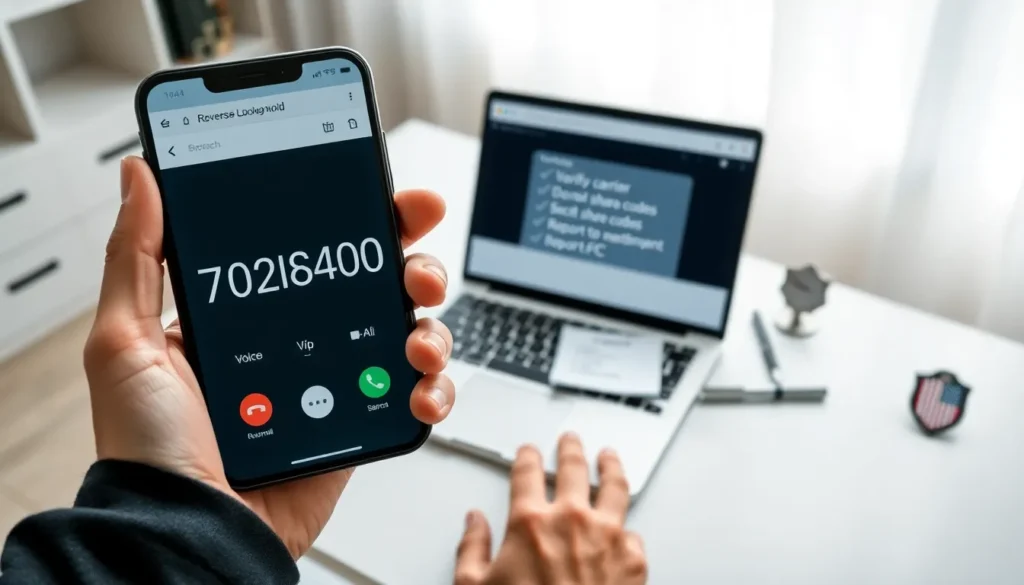

7024869400 appears on a caller ID. The reader wants to know who called and if the call is safe. This article lists quick checks, verification steps, and protection actions. Each step uses clear language and simple actions.
Table of Contents
ToggleKey Takeaways
- Treat calls from 7024869400 as unverified until you confirm the caller—use reverse phone lookup and social searches to check carrier, line type, and user reports.
- Look for red flags—urgent payment requests, demands for codes or remote access, poor grammar, or repeated calls—and do not provide personal or financial information.
- If you must call back, find an official number from the company website or government site, call from a secondary phone, and request written confirmation before sharing details.
- Block 7024869400, enable carrier spam filters and call‑blocking apps, and enable two‑factor authentication to reduce exposure if the number proves malicious.
- Report suspicious calls to your carrier, the FTC, FCC, and IC3, and immediately contact banks and credit bureaus if you shared financial or identity information.
What We Can Quickly Determine About 7024869400
7024869400 shows a U.S. local-area format. A simple lookup can reveal the carrier and general location. Many calls with this format come from mobile or VoIP services. They can route through different states. A single lookup cannot prove identity. Scammers often spoof numbers. Spoofing displays a real number while hiding the true origin. The caller may be a legitimate business, a telemarketer, or a scammer. Quick checks give clues. The reader should check the call time, the message left, and whether the call repeats. If the caller left a voicemail, they may identify themselves. If the caller requests money, access codes, or personal data, that is a red flag. If the caller offers a service the recipient did not request, the call may be unsolicited. A reverse lookup can supply user reports and comments. Many databases collect complaints about specific numbers. Multiple complaints make the number suspect. Few or no complaints do not guarantee safety. The reader should treat unknown numbers with caution and verify before sharing information.
Common Signs It Might Be Spam, Scam, Or Legitimate
The reader should look for clear signs to judge the call. The list below shows common indicators for spam, scam, or a legitimate call.
Red Flags To Watch For When Evaluating A Call
A caller pressures the recipient to act now. A caller asks for payment via gift card, wire transfer, or cryptocurrency. The caller asks for Social Security number, bank login, or one-time codes. The caller claims to represent a government agency and threatens arrest. The caller uses poor grammar or many scripted lines. The caller requests remote access to a device. The caller refuses to provide a callback number or official contact method. The caller calls repeatedly in a short span.
Types Of Scams Commonly Using Local Numbers
Tax and government impersonation calls often use local numbers. Tech support scams claim a device has a problem and use local numbers to appear real. Bank and credit card fraudsters call asking to confirm charges. Loan and debt-relief scams push upfront fees. Romance and extortion scams may use local numbers to build trust. Robocalls and prerecorded offers also use local-looking numbers. Scammers use local numbers to lower suspicion. The reader should assume risk until verification confirms the caller.
Step‑By‑Step Methods To Identify The Caller
The reader can follow clear steps to identify the caller. Each step uses low risk and direct tools.
Use Reverse Phone Lookup Services And What To Expect
The reader can use a reverse phone lookup service. They enter 7024869400 into a reputable database. The service returns a carrier, line type, and user-submitted reports. The reader should prefer paid services for deeper reports. Free services may show basic info and user comments. Look for multiple similar complaints. If the database shows a business name, verify that name separately. Databases do not catch spoofing. The reader should use the lookup as one data point.
Search Social Media And Business Directories
The reader can search social media platforms for the number. People often post scam reports on Facebook, Reddit, and Twitter. Business directories may list the number if a company uses it. The reader should check Google Business, Yelp, and state business registries. Match the listed business address with other records. If the number appears in many complaint threads, the call likely originates from a scam operation.
Call‑Back Best Practices And Safer Alternatives
If the reader decides to call back, they should use caution. They should not use the callback number shown on the original call if it looks suspect. They should find an official number from the company website or a government site. They should avoid numbers sent in texts or emails. They should call from a secondary phone or block caller ID when possible. If the reader chooses to call 7024869400 back to verify, they should ask for a business name, a callback number, and a written confirmation via email. The reader should not give personal or financial data over that call.
How To Protect Yourself If 7024869400 Is Malicious
The reader should act quickly if signs point to a malicious call. The steps below reduce harm and limit exposure.
Blocking, Filtering, And Phone Settings To Enable
The reader should block 7024869400 on their phone. The reader should enable carrier spam filters and call-blocking apps. The reader should silence unknown callers and send them to voicemail. The reader should activate two-factor authentication on key accounts. The reader should install mobile security apps and update device software. The reader should set the phone to refuse third-party caller ID updates if available.
How To Report The Number To Authorities And Carriers
The reader should report 7024869400 to the carrier, the Federal Trade Commission, and the FBI’s Internet Crime Complaint Center (IC3) when fraud occurs. The reader should file a complaint with the Federal Communications Commission for robocalls. The reader should forward scam texts to 7726 if the message uses SMS. The reader should provide call time, message content, and any details about payment methods requested. The reader should also report to the Better Business Bureau if a business name appears.
If You’ve Shared Personal Or Financial Information: Immediate Steps
The reader should contact banks and credit card companies immediately. The reader should freeze or close exposed accounts. The reader should change passwords and enable two-factor authentication. The reader should place a fraud alert or credit freeze with the three major credit bureaus. The reader should monitor accounts and credit reports for suspicious activity. The reader should consider identity-theft protection services for extra monitoring.
When To Escalate: Legal, Financial, And Credit Protections
The reader should escalate when the call causes financial loss or identity theft. They should gather evidence before contacting authorities. The reader should save call records, voicemails, text messages, and any payment receipts.
Resources And Contacts For U.S. Call And Scam Complaints
The reader should contact their bank and card issuer first for fraud on accounts. The reader should file a report with the FTC at IdentityTheft.gov for identity theft. The reader should file a complaint with the FCC for illegal robocalls. The reader should submit a report to the IC3 at the FBI for cyber or phone scams. The reader should contact local law enforcement for threats or extortion. The reader should consider a consumer attorney if the financial loss is large. The reader should use the carrier fraud department to trace calls and block further attempts.