
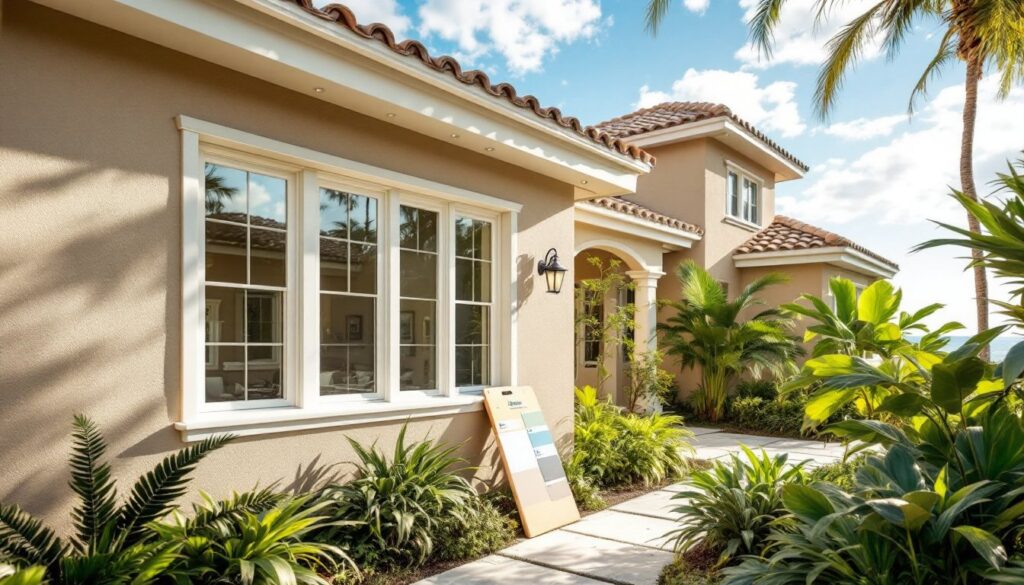

Florida stucco homes face relentless sun, salt spray, and moisture that can break down ordinary paint in a season or two. Choosing the right exterior paint color isn’t just about curb appeal, it’s about selecting a finish that’ll hold up to the Sunshine State’s climate while reflecting your home’s character. Sherwin Williams offers proven exterior formulas designed for exactly this challenge, with a color palette that ranges from cool coastal shades to warm earth tones that complement natural Florida landscapes. The trick is matching a color to both your climate zone and the specific demands of stucco surface preparation and application.
Table of Contents
ToggleKey Takeaways
- Sherwin Williams exterior paint colors designed for Florida’s climate include formulas with mildewcide additives and enhanced water resistance that withstand salt spray, UV fading, and moisture-driven mold growth on stucco.
- Light and medium-value colors like Accessible Beige (SW 7036) and Sea Salt (SW 6204) are recommended for Florida stucco because darker shades absorb heat, accelerate fading, and create expansion stress on porous stucco surfaces.
- Proper stucco preparation—pressure washing at 1500 PSI maximum, patching cracks with repair compound, and priming with masonry primer—is essential for paint adhesion and long-term durability that extends finish life to 7–10 years.
- Premium Sherwin Williams formulas like Duration Exterior and Emerald Exterior flex with stucco’s temperature-driven expansion and contraction, with Emerald Exterior providing superior UV protection for darker colors like Tricorn Black.
- Apply topcoat paint with a 3/8-inch or 1/2-inch nap roller in W-pattern overlaps when temperatures are between 50–85°F and falling, avoiding evening application and allowing 24 hours between coats for proper film formation.
Why Florida Climate Demands Specialized Paint Choices
Florida’s subtropical and tropical climate is brutally tough on exterior finishes. Salt air corrodes conventional coatings, UV rays fade standard paints within 2-3 years, and the relentless moisture creates perfect conditions for mildew and mold growth. Stucco, a porous, cement-based finish common in Florida construction, absorbs this moisture like a sponge, which means the paint sitting on top has to breathe while still blocking water penetration.
Sherwin Williams exterior paints formulated for humid climates feature mildewcide additives and enhanced water resistance that standard latex paints lack. Their premium lines like Duration Exterior and Emerald Exterior are engineered to flex with stucco’s natural expansion and contraction as temperatures swing 40 degrees between summer and winter. These aren’t just marketing claims, they’re built into the resin structure and film formation of the product.
The color you choose matters just as much as the formula. Darker colors absorb more solar heat, which accelerates fading and can create stress points in stucco where expansion happens faster. Lighter colors reflect heat and hold their appearance longer, especially in direct sun exposure. This is why most experienced Florida stucco painters gravitate toward medium to light values, even if they’d personally prefer deeper tones.
Top Sherwin Williams Colors For Stucco In The Sunshine State
Warm Neutral Tones That Complement Natural Surroundings
Accessible Beige (SW 7036) is arguably the most popular stucco color in Florida’s inland regions. It’s warm enough to feel inviting, neutral enough to work with nearly any trim, landscaping, or roof color, and it hides surface imperfections better than lighter shades. The undertone leans slightly towards taupe rather than yellow, so it won’t look dated or overly peachy in harsh midday sun. Pair it with a crisp white trim and darker metal accents for a contemporary look, or go with tan trim for a softer, more traditional aesthetic.
Urbane Bronze (SW 7048) reads as a warm gray-brown that’s increasingly popular for stucco in upscale neighborhoods. Unlike pure grays, it doesn’t feel cold or institutional, and it photographs beautifully without looking like it’s trying too hard. It works exceptionally well in coastal areas where it complements native vegetation and sand tones. Budget for 2-3 coats on stucco to achieve full coverage and depth, especially if you’re painting over a lighter existing color.
Tricorn Black (SW 6258) pushes into dramatic territory but works on modern stucco designs with large glass sections and clean lines. If you go this dark, ensure your stucco is in excellent condition, any surface variation becomes highly visible. You’ll also want to specify a paint with excellent UV protection, since black absorbs maximum solar energy and will fade without a premium formula. This is where Emerald Exterior earns its reputation: it holds color saturation far longer than economy lines.
Cool Coastal Shades For Beachside Homes
Sea Salt (SW 6204) is a soft, grayish-green that feels at home in beach communities without screaming “beach house cliché.” It’s subtle enough to work on mid-sized coastal properties and complements natural wood trim beautifully. The color’s sophistication comes from its muted undertone, it’s not a bright aqua or turquoise, which would look harsh against stucco’s texture. This shade is genuinely popular among architects and designers working on high-end coastal renovation projects.
Infinity (SW 9499) is a crisp, clean off-white that works as a neutral canvas without feeling sterile. Unlike pure white, which can appear grayish or yellow depending on lighting and undertone, Infinity maintains a balanced cool tone throughout the day. On stucco, which naturally has texture and variation, an off-white like this prevents your home from looking like a blank wall. It pairs exceptionally well with natural cedar or composite trim.
Seaworthy (SW 7620) leans toward a pale blue-gray that captures the essence of sand and sea without being literal. It’s sophisticated, calming, and remarkably forgiving of the salt spray and UV exposure that hammers beachfront properties. According to design inspiration on Home Bunch, pale blue-grays are trending strongly in contemporary coastal designs, and this Sherwin Williams shade delivers that look with proven durability ratings. If you’re near the beach, test a large sample board on your home’s south-facing wall for at least a week before committing.
Preparation And Application Tips For Stucco Surfaces
Stucco prep work separates professional-looking finishes from blotchy, peeling failures. Start by pressure washing at no more than 1500 PSI, higher pressure damages stucco’s cement matrix and creates micro-cracks where water infiltrates. Use a 25-degree nozzle and keep the spray moving to avoid gouging or eroding the surface.
Inspect for cracks wider than 1/8-inch and patch them with a stucco repair compound like DAP Plastic Cement or equivalent. Small hairline cracks can be sealed with paintable caulk rated for exterior masonry, but anything deeper needs proper patching. Stucco shrinks as it cures, so apply patches in two thin coats rather than one thick one, allowing 24 hours between applications.
Priming is non-negotiable on new stucco or bare patches. Use a masonry primer like Sherwin Williams Loxon Concrete & Masonry Primer, it’s specifically formulated to bond to mineral surfaces and provide excellent adhesion for topcoat paint. One coat is usually sufficient on primed stucco, but two coats are standard practice on raw patches or significant color changes. Budget 350-400 square feet per gallon for primer on stucco’s textured surface.
When applying topcoat paint, use a 3/8-inch or 1/2-inch nap roller, the texture requires a thicker nap than smooth drywall. A 1/4-inch roller won’t work: you’ll miss valleys and create uneven coverage. Brush the edges and corners first (a 2-3 inch angled sash brush works well), then roll in overlapping W-patterns to ensure even distribution. Don’t thin the paint unless applying in temps above 85°F. Stucco is porous enough that “leveling” (thinned coats running smoothly) isn’t necessary and only wastes product and reduces durability.
Apply paint when ambient temperature is between 50-85°F and falling, meaning warmer in morning/midday is fine, but don’t paint in the evening when temperature is dropping rapidly. Rapid cooling prevents proper film formation. Wait at least 24 hours between coats, and allow 7-10 days of dry weather before exposing your fresh paint to heavy rain. Florida’s sudden afternoon thunderstorms are legendary: paint in early morning or check the 10-day forecast before scheduling your project.
Conclusion
Selecting a Sherwin Williams exterior color for Florida stucco isn’t a casual decision, the climate, material, and preparation all matter equally. Whether you choose a warm neutral that anchors your landscape or a cool coastal shade that reflects the region’s natural palette, investing in a premium formula and proper application technique ensures your paint will last 7-10 years rather than 3-4. The top Sherwin-Williams exterior paint colors showcase finishes proven across diverse climates, and Florida’s harsh conditions demand exactly that kind of tested durability. Start with sample boards, commit to thorough surface prep, and your stucco home will reward you with color that holds true year after year.