
Small modern homes are gaining traction among homeowners who want quality living without the maintenance burden or oversized mortgage. Whether you’re a first-time buyer, downsizing, or starting fresh, small modern home plans offer efficient layouts that maximize square footage and minimize waste. Modern small homes aren’t cramped, they’re intentional. They blend clean lines, open spaces, and smart storage to create homes that feel spacious and livable. This guide walks you through what defines modern small design, explores popular layouts, and shares practical tips for building or renovating within your budget.
Table of Contents
ToggleKey Takeaways
- Small modern home plans typically range from 600 to 1,200 square feet and prioritize open floor plans, high ceilings, and natural light to maximize usable space and create a sense of openness.
- Efficient small modern home designs integrate storage into the structure using built-in shelving, under-stair storage, and full-height cabinetry to eliminate visual clutter while maximizing functionality.
- Open concept living eliminates unnecessary walls between kitchen, dining, and living zones, making homes feel larger while reducing wasted circulation space and allowing natural light to travel farther.
- Choosing durable, honest materials like concrete floors, natural wood, and simple tile reduces upfront costs and maintenance while aligning with modern aesthetics that improve with time.
- Investing in energy efficiency features like Energy Star-rated windows and high-efficiency HVAC systems pays for itself through lower utility bills and increased resale value, even in compact footprints.
- Prefab and modular small modern homes reduce construction waste and labor costs by 10-20% compared to site-built equivalents, making sustainable building more accessible and affordable.
What Defines Modern Small Home Design
Modern small home design isn’t just about square footage, it’s about intentional planning and thoughtful aesthetics. Modern design emphasizes functionality, minimalism, and the elimination of unnecessary ornamentation. Small homes take that philosophy further by forcing every element to earn its place.
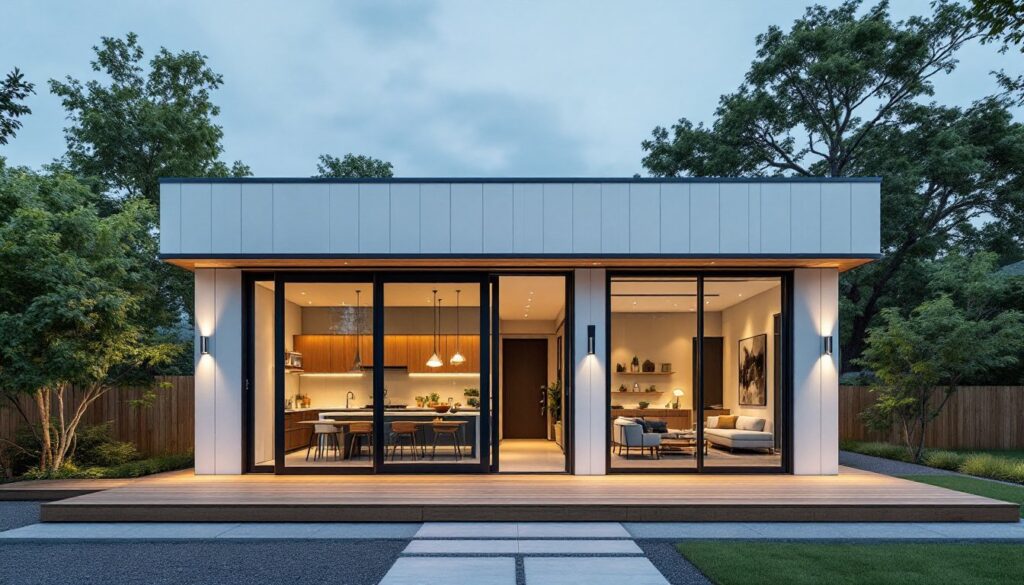
A true modern small home typically ranges from 600 to 1,200 square feet and relies on a few core principles: open floor plans that eliminate walls, high ceilings to create vertical space, large windows for natural light, and a connection between indoor and outdoor living. The materials are honest, exposed beams, polished concrete floors, natural wood, and metal accents, without precious finishes that clutter the visual landscape.
Modern small homes reject dark, compartmentalized layouts in favor of transparency and flow. You’ll see fewer hallways, more shared spaces, and a deliberate blurring between kitchen, living, and dining zones. This approach makes the home feel larger psychologically while reducing wasted circulation space. The style also prioritizes sustainability, with energy-efficient windows, proper insulation, and materials chosen for longevity rather than trend.
Key Features of Efficient Small Modern Floor Plans
Efficient small modern floor plans share specific design strategies that maximize usable space and minimize waste. The layout typically avoids dead-end rooms, unused corners, or walls that serve no structural purpose. Let’s break down the essential features.
Open Concept Living Spaces
Open concept is the hallmark of modern small design. Rather than separate rooms for living, dining, and kitchen, these zones flow together in one unified space. This approach accomplishes three things: it eliminates walls that would break up sightlines, it allows natural light to travel farther, and it makes the entire footprint feel larger.
In practice, open concept means the kitchen island becomes a natural boundary between cooking and living zones without requiring a wall. Flooring transitions (tile to wood, for instance) can subtly define areas without interrupting visual flow. The trade-off is noise and cooking odors traveling into living spaces, something to consider if you entertain frequently or have strong cooking habits. Well-designed modern small homes often include pocket doors or sliding glass walls that can temporarily separate zones when needed.
Smart Storage and Multi-Purpose Rooms
Small modern homes integrate storage into the bones of the design rather than relying on clunky furniture or built-ins that dominate the space. Built-in shelving, under-stair storage, and cabinetry that extends to the ceiling use vertical space efficiently. Many modern small homes feature bedroom/office hybrids, lofts over living areas, or flex rooms with sliding doors that adapt to changing needs.
The kitchen deserves special attention because it’s the most storage-intensive room proportionally. Modern small kitchens use full-height cabinetry (floor to ceiling), pull-out pantries, and island storage on both sides. Appliance selection matters too, smaller appliances (24-inch ranges, compact refrigerators) suit the aesthetic and functionality. Bathroom storage follows the same logic: recessed shelving, medicine cabinets, and under-vanity organization keep visual clutter minimal while maximizing function.
Popular Small Modern Home Layouts and Styles
Several floor plan types have emerged as proven layouts for small modern homes. The single-story open plan is the simplest: living, kitchen, and bedroom(s) all on one level with no internal walls beyond what’s structurally required. This maximizes accessibility and flow but can feel cramped if ceiling height doesn’t compensate.
The loft-style layout stacks sleeping or work areas above the main living zone, creating dramatic ceiling height in the common area while reclaiming floor space. A two-story small home (often under 1,000 square feet) puts all living on the ground floor and bedrooms upstairs, a traditional approach that still works well for families. Prefab and modular small homes have gained credibility recently: companies design layouts for efficient factory construction, which reduces waste and cost. Publications like Design Milk and Dwell regularly feature innovative prefab small home designs that prove the style doesn’t require custom architecture.
Regional and lifestyle preferences shape small home design too. Coastal small homes favor large decks and outdoor living as extensions of interior space. Urban small homes maximize vertical gardens and minimize outdoor areas. Minimalist tiny homes push efficiency to extremes, while “small but luxe” homes invest in high-quality finishes and appliances within a compact footprint. The key is choosing a layout that aligns with how you actually live, not an aspirational version of yourself.
Budget-Friendly Tips for Building or Renovating a Small Modern Home
Small modern homes are inherently budget-friendly because there’s less to build, fewer materials, and shorter construction timelines. That said, smart choices multiply savings.
Start with an efficient floor plan. Hire an architect or designer who specializes in small homes, the upfront cost pays for itself by eliminating expensive design mistakes. A good modern small home plan avoids unnecessary complexity, oddly-shaped rooms, and structural complications.
Choose materials that age well. Modern style rewards durable, honest materials: concrete floors, plywood, natural wood, and simple tile. These cost less upfront than high-maintenance finishes and improve with time. Skip trends that’ll feel dated in five years.
Go simple on finishes. Modern design actually permits minimal finishes, exposed structure, natural colors, and clean lines reduce material costs. Avoid elaborate crown molding, wainscoting, or decorative tile. One accent wall or material choice (like reclaimed wood) adds character without excess spending.
Invest in energy efficiency. Yes, good windows, insulation, and HVAC systems cost more upfront, but they shrink utility bills immediately and add resale value. In a small home, the cost of upgrading to Energy Star-rated windows or a high-efficiency heat pump is proportionally lower than in a large house. Apartment Therapy has detailed guides on budget renovations that pair small space living with smart spending.
Consider modular or prefab construction. Factory-built components reduce waste, speed timelines, and can lower labor costs. Prefab small homes often cost 10-20% less than site-built equivalents.
Do some work yourself where safe. Painting, flooring installation, and basic finishes are DIY-friendly. Structural work, electrical, and plumbing require licensed professionals in most jurisdictions, don’t cut corners on code compliance. A permit often costs under $500 and protects your investment and safety.
Conclusion
Small modern home plans deliver thoughtful design, efficient use of space, and affordability without sacrificing style. Whether you’re drawn to minimalist aesthetics, sustainable living, or simply want lower maintenance and costs, modern small homes adapt to your lifestyle. The key is choosing a layout that works for how you live, investing in durable materials, and resisting the urge to add unnecessary bulk. Start with a solid plan, be realistic about what features you need, and you’ll end up with a modern small home that’s as enjoyable to live in as it was smart to build.